


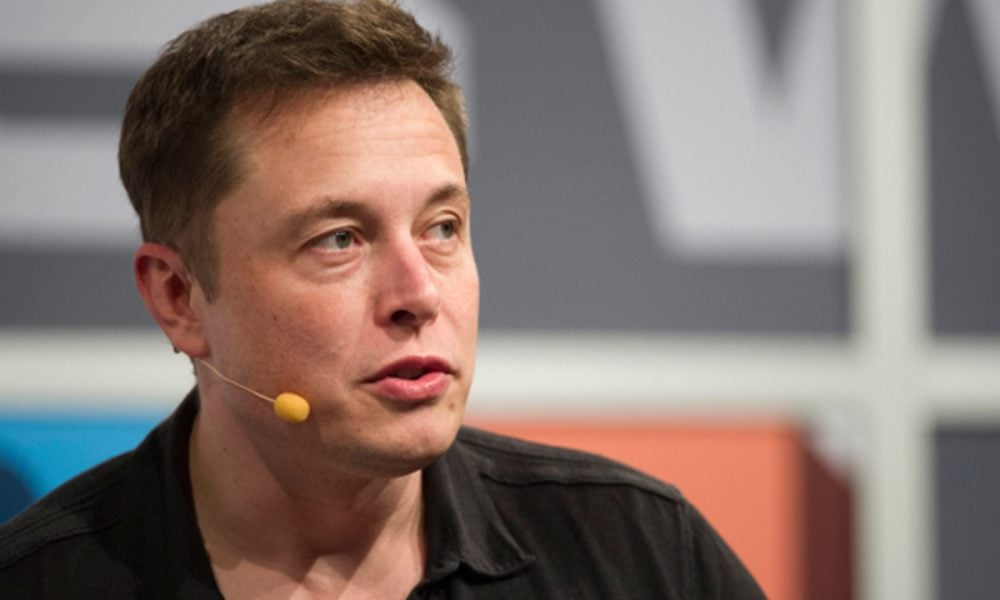
ELON MUSK WEALTH DIDN'T COME FROM WEALTHY INHERITANCE
The story of Elon Musk’s wealth is not a tale of a traditional billionaire hoarding cash in a bank account. Instead, it is a masterclass in hyper-aggressive reinvestment, high-stakes risk-taking, and the capitalization of future-facing industries. As of 2026, Musk remains one of the wealthiest individuals on Earth, with a net worth that fluctuates violently based on the stock market value of his primary companies: Tesla, SpaceX, xAI, and Neuralink.Understanding how Musk amassed this wealth, the progress steps he took to get here, and why it matters offers a direct blueprint of how modern innovation, finance, and global influence intersect.The Progress Steps: How the Wealth Was BuiltMusk’s financial trajectory is characterized by a series of "all-in" bets where he routinely risked his entire net worth on companies that the public and traditional investors believed would fail. His progress can be broken down into four distinct eras.1. The Early Internet Era: Zip2 and PayPal (1995–2002)Musk’s foundational wealth did not come from a massive inheritance; it came from early software engineering and internet infrastructure.Zip2: Founded in 1995 with his brother Kimbal, Zip2 provided online city guides for newspapers. In 1999, Compaq bought the company, netting Musk $22 million.X.com and PayPal: Instead of retiring, Musk poured $12 million of his windfall into X.com, an early online banking platform. X.com merged with Confinity to become PayPal. When eBay acquired PayPal in 2002 for $1.5 billion, Musk walked away with roughly $180 million after taxes.2. The High-Risk Diversification: Tesla and SpaceX (2002–2010)Most entrepreneurs would have diversified their PayPal fortune into safe real estate or index funds. Musk did the exact opposite. He split his $180 million into three incredibly high-risk ventures: $100 million to found SpaceX, $70 million to fund Tesla, and $10 million into SolarCity.By 2008, both SpaceX and Tesla were on the brink of bankruptcy. SpaceX had suffered three failed rocket launches, and Tesla was burning through cash during the global financial crisis. Musk faced a choice: split his remaining money between the companies, risking the death of both, or consolidate. He chose to fund both, scraping by on loans from friends. Weeks later, SpaceX successfully launched Falcon 1, securing a $1.6 billion contract from NASA, and Tesla secured a lifeline investment.3. The Industrial Scaling and Market Domination (2012–2020)This era transformed Musk from a successful tech entrepreneur into an industrial titan.Tesla’s Production Hell: The launch of the Model S, Model X, and eventually the Model 3 forced Tesla to scale mass manufacturing. Musk famously slept on the factory floor during the "production hell" of the Model 3 in 2017–2018.SpaceX Reusability: In 2015, SpaceX successfully landed the first-stage booster of a Falcon 9 rocket. By proving that rockets could be reused, SpaceX radically slashed the cost of reaching orbit, establishing a near-monopoly on global commercial space flight.4. The Trillion-Dollar Valuation and AI Pivots (2020–Present)Musk’s net worth skyrocketed in 2020 and 2021 when Tesla’s stock price surged by over 700%, pushing its valuation past $1 trillion. This growth was driven by Tesla proving it could maintain sustained profitability and mass-produce electric vehicles at scale.In recent years, Musk shifted his wealth generation strategy toward artificial intelligence and next-generation connectivity. SpaceX launched Starlink, a satellite internet constellation that now dictates global communications. Simultaneously, Musk founded xAI to compete in the generative AI race, leveraging data from X (formerly Twitter) to train advanced AI models, while Neuralink began its first human clinical trials for brain-computer interfaces.Why Elon Musk’s Wealth Structure is UniqueTo understand why Musk's wealth matters, one must understand what it actually consists of. Musk is famously "cash-poor" relative to his net worth. He does not draw a traditional salary from his companies.Instead, his wealth is tied up entirely in equity (shares) of the businesses he owns. For years, Musk funded his lifestyle and new ventures by borrowing money against his Tesla shares rather than selling them, avoiding massive capital gains taxes while keeping tight voting control over his corporate empire. His historic 2018 Tesla compensation package was structured entirely around performance milestones: he only got paid if Tesla’s market value and revenue hit astronomical targets. Because the company hit those targets, Musk became the richest man in the world.Why It Matters: The Global ImplicationsMusk’s wealth and progress steps matter far beyond the pages of financial magazines. His financial power directly shapes geopolitics, human technology, and the global economy in several profound ways.1. Accelerated Transition to Sustainable EnergyBefore Tesla, major automotive companies viewed electric vehicles as slow, ugly golf carts that were structurally unprofitable. Musk used his wealth to prove that EVs could be high-performance, desirable, and incredibly lucrative. Today, every major global automaker has shifted its strategy toward electrification. Musk’s wealth effectively forced an entire century-old global industry to modernize.2. The Privatization of Space and GeopoliticsSpace exploration was historically the exclusive domain of sovereign superpowers like the United States, Russia, and China. Today, a private citizen controls the dominant infrastructure for accessing space. Through Starlink, Musk controls the world’s most critical satellite internet network. This became a matter of major geopolitical significance during global conflicts, where decisions regarding Starlink availability altered battlefield communication infrastructure. It raises critical questions about whether critical global infrastructure should be controlled by a single individual.3. Redefining Capital AllocationTraditional venture capitalists spread risk across dozens of small bets. Musk’s progress proves the viability of "vertical integration" and extreme concentration. He uses the capital from one success to solve massive engineering bottlenecks in another. The software engineering principles from PayPal were applied to Tesla’s autonomous driving software, which in turn feeds into the robotics work at xAI.4. The Debate Over Extreme Wealth and PowerMusk’s trajectory serves as a lightning rod for discussions around wealth inequality and corporate governance. When a single individual possesses the capital to purchase a major global communication platform like Twitter on a whim, or fund a private mission to Mars, it redefines the concept of individual power versus state power. His wealth demonstrates that in the modern digital age, extreme capital combined with technological leverage can rival the influence of actual governments.The Bottom LineElon Musk’s wealth is the financial byproduct of radically shifting global paradigms. From internet banking and electric vehicles to reusable rockets and artificial intelligence, his progress steps show a relentless pattern of leveraging past wins to fund future, seemingly impossible engineering projects.It matters because it serves as a living experiment in human progress: a testament to what happens when unprecedented financial resources are concentrated in the hands of an individual obsessed with pushing the boundaries of species-level technology. Whether that concentration of power is viewed as an inspiring leap forward or a cautionary tale depends entirely on how his technologies shape the coming decades.

Comments (1)
Sign in to commentI don't understand